Is a Work Optional Lifestyle the New Retirement?
Traditionally, retirement planning has followed a fairly straightforward path: work for decades, save along the way, maybe pick up a pension, and at some point hang it up to start living off Social Security and your investments.
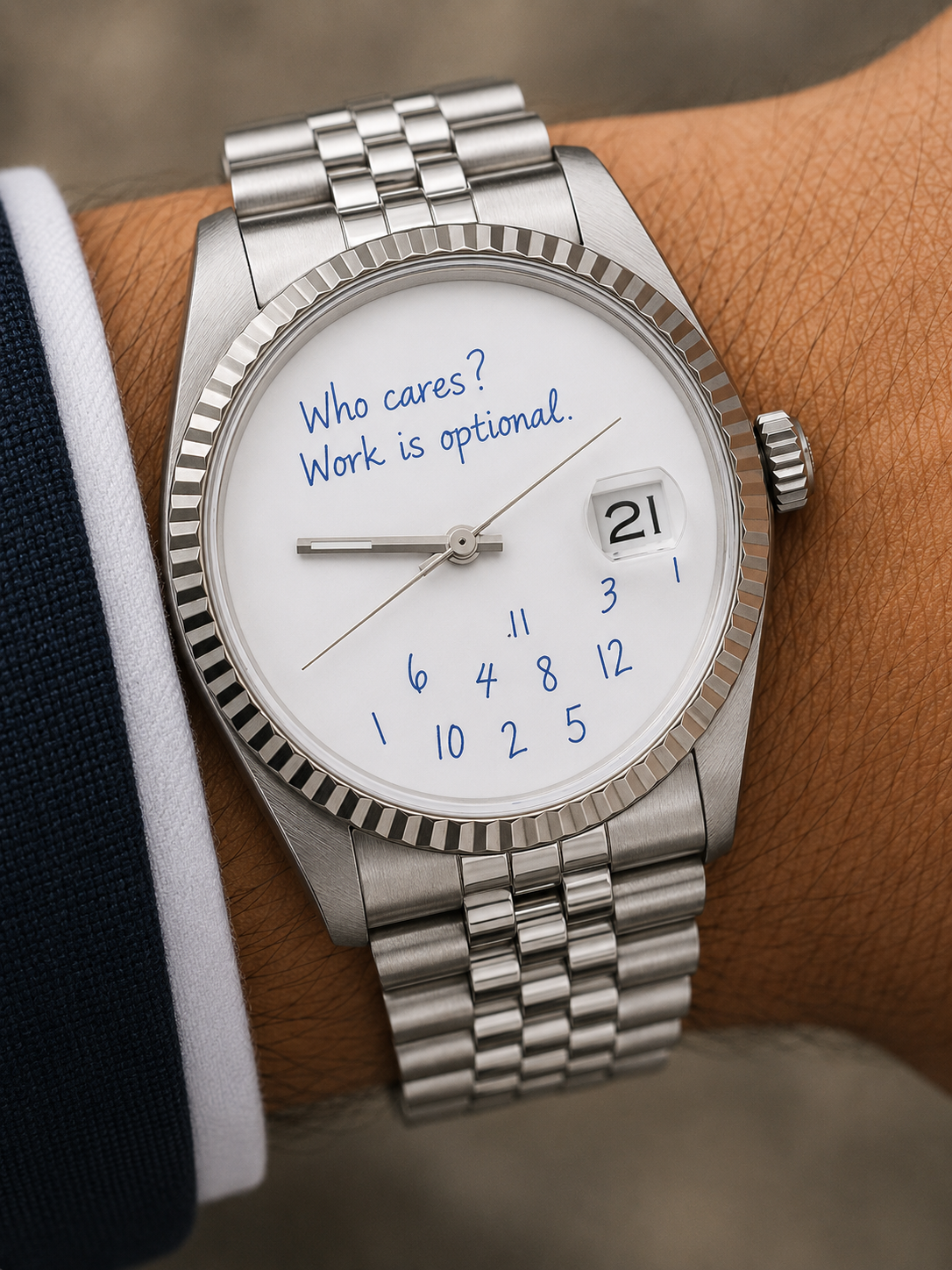
Increasingly, I’m hearing successful individuals strive for a different kind of retirement altogether: the ability to enjoy a work optional lifestyle.
We’re living longer and healthier lives. Technology has made it possible to work in ways and from places previous generations couldn’t have imagined. And AI may reshape everything we know about work and productivity.
At the same time, traditional pensions have become less common, and questions about the future of Social Security have placed more responsibility for financial independence on the individual.
All of that has changed the way that successful individuals are thinking about what the retirement years look like for them.
A work optional lifestyle means reaching the point where continuing to work is a choice.
And let’s be clear about what that means. Making work optional doesn’t necessarily mean retiring early, or even wanting to retire. It means building enough financial independence that the life you want no longer depends on the next promotion, the next deal, the next vesting date, or another good year for the business.
You may love running your business, feel energized by your career, or find that work remains an important part of who you are. Reaching this point simply gives you more choice over what comes next.
And getting there is deeply personal. It depends on what you’ve accumulated, how you want to live, the people who depend on you, the risks you want to prepare for, and how much flexibility you want your wealth to provide.
What Would Work Optional Look Like for You?
Think about how your choices and priorities might change if earning more money were no longer the primary consideration.
For much of your career, you’ve likely taken a risk on the next opportunity…that’s what successful people do. A bigger role, another deal, or another chance to grow the business usually came with a clear financial reason to say yes.
“Money is a means, but the real goal is the freedom that money actually gives you.”
— Dan Sullivan, prominent business coach, author, and the co-founder of Strategic Coach
But later in a successful career, the trade-offs can look different.
Your time may feel more valuable than it did earlier in your career. There may be places you want to go, people you want to spend more time with, or simply parts of your life you no longer want to schedule around work.
That doesn’t mean you’ve become less ambitious or that you’ve somehow lost a step because another year has passed. It may simply mean that money is no longer the only thing you’re optimizing for.
For a business owner, this can show up slightly differently. You may still love what you’ve built and have no desire to walk away, while finding yourself asking, “How much longer do I want to do this?” rather than, “How much longer do I need to?”
You Probably Won’t Feel Ready
Here’s something we’ve learned from having these conversations with successful families: you probably won’t feel completely ready when the numbers say you are.
You’ve spent decades working, saving, investing, and moving the financial boulder forward. My guess is that you’ve probably accumulated more than you ever could have imagined when you were younger; your younger self would be proud.
And yet when a financial advisor with fancy software shows you that a work optional lifestyle is possible, your reaction may still be:
“Are you sure?”
Think about how different this is from almost every the critical decisions that came before it. For years, earning more and saving more moved you toward something better. Another good year made your family’s balance sheet stronger. Another promotion, vesting period, or successful deal gave you a little more breathing room. Maybe you even got that vacation home you both dreamed about.
Now you’re considering whether you can live without it. That’s a very different muscle to use.
And naturally, your mind may go to the things that are harder to predict.
What happens if markets go through a difficult stretch?
What if your family needs more support than expected?
What if the life you want costs more than you thought?
Those are reasonable questions, and they deserve thoughtful answers.
But there’s another possibility worth considering: What if you’re already there?
There’s Always a Reason to Keep Going
Here’s the conundrum: just as your wealth begins giving you permission to slow down, you may be hitting your stride professionally.
Decades of experience, relationships, and lhard-earned expertise have accumulated too, and you may be doing some of the best and most rewarding work of your career.
So work may become optional at exactly the point when your career or business is giving you the most reasons to stay.
There may be stock left to vest, another deal to close, or another milestone that feels too close to walk away from.
There’s almost always a reason to keep going.
The more interesting question is whether you still need to.
If the numbers say you can afford to make a work optional lifestyle a reality, but something is still holding you back, it’s worth understanding why.
What would actually make you feel like you have enough?
Take the question to an extreme. If your wealth doubled overnight, what would it enable you to do that you can’t do today?
Would you live differently? Help your family differently? Travel more? Give more? Finally do something you’ve been putting off?
And if the honest answer is “Not much,” then maybe you’re closer than you think.
What Is Your Wealth For?
Making work optional doesn’t require you to walk away from the life you’ve built. It gives you more freedom to decide how you want to live it.
For decades, work and wealth tend to move in the same direction. You work more, earn more, save more and build more. That process creates opportunities for your family and expands what’s possible.
Eventually, though, the wealth you’ve accumulated can begin to change that relationship. Work can remain important without every decision having to maximize the financial outcome. Success can still include the next opportunity, but it can also create more room to enjoy what you’ve already built.
There isn’t one right version of what comes next. The point is having the freedom to choose it.
Your wealth can begin serving the life you want today, rather than a life you’ve been saving for someday.
Wells Fargo Advisors Financial Network does not provide legal or tax advice.
Wells Fargo Advisors Financial Network did not assist in the preparation of this report, and its accuracy and completeness are not guaranteed. The opinions expressed in this report are those of the author(s) and are not necessarily those of Wells Fargo Advisors Financial Network or its affiliates. The material has been prepared or is distributed solely for information purposes and is not a solicitation or an offer to buy any security or instrument or to participate in any trading strategy. Additional information is available upon request.